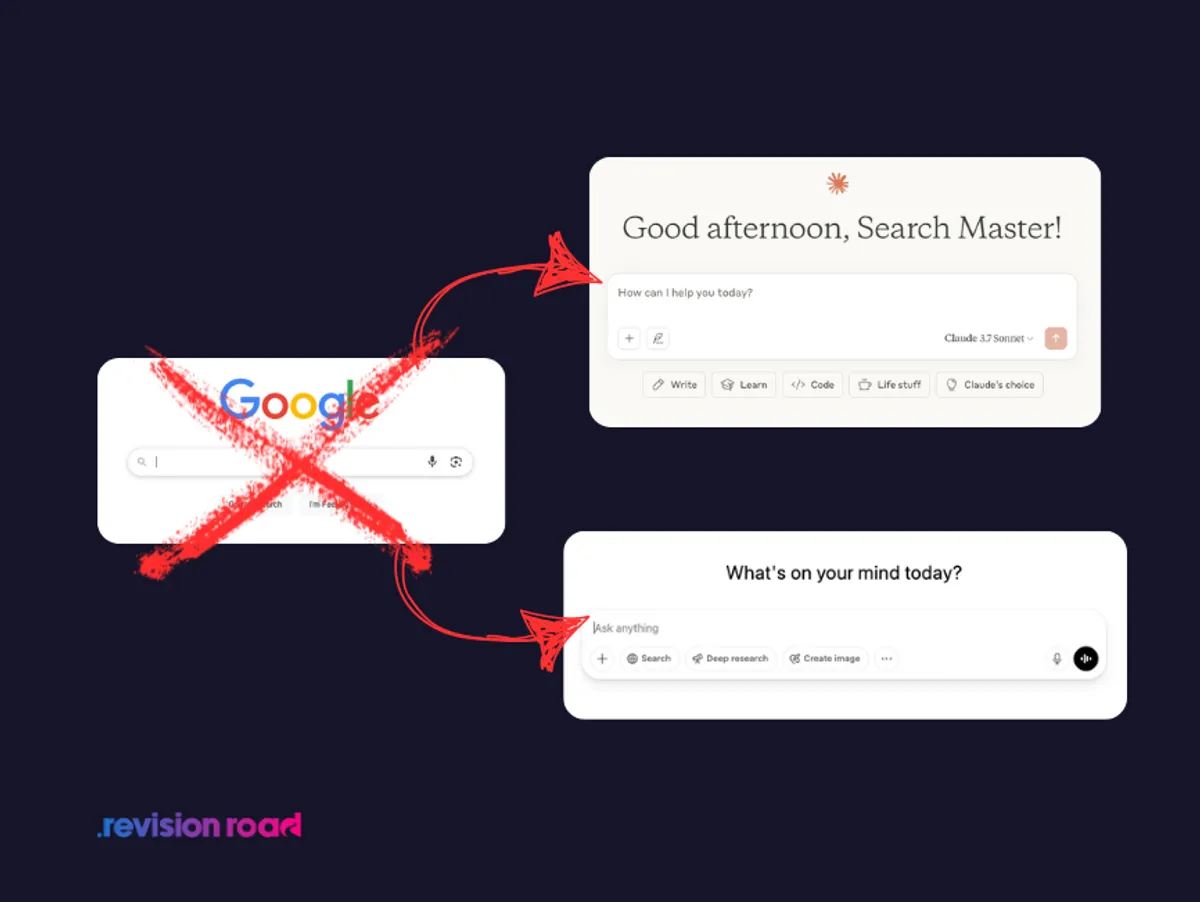
Search is transforming rapidly. Millions are abandoning conventional search platforms like Google for AI assistants such as ChatGPT, Perplexity, and Claude to pose questions, explore products, and inform purchasing choices.
OpenAI’s rollout of product feeds within ChatGPT signals a significant shift: how your business appears online will change. Sites lacking AI-platform optimization risk becoming invisible.
Why AI search matters for website visibility
Fewer people browse traditional search result pages. They’re receiving answers within ChatGPT or Perplexity instead.
According to recent findings:
- ChatGPT surpasses 800 million weekly active users
- Perplexity AI gets over 160 million monthly visits
- Gartner projects a 25% reduction in standard search volume by 2026 due to expanding AI adoption
Conventional SEO strategies alone prove insufficient now.
What are ChatGPT product feeds?
OpenAI enables users to:
- Access products directly through AI chat
- Examine product specifics, pictures, costs, availability
- Navigate to company websites for transactions
Retailers lacking structured product information or schema markup won’t appear.
How to optimize your website for AI search tools
Prepare your site for AI discoverability using these approaches:
1. Use structured data and schema markup
AI platforms depend on organized data comprehension. E-commerce sites require product schema implementation.
Recommended tools:
- Google Merchant Center
- Schema.org markup plugins or direct implementation
- Feed management platforms like DataFeedWatch or GoDataFeed
2. Publish clear, useful FAQs
Generative platforms frequently extract FAQ content. Use genuine visitor inquiries and deliver straightforward explanations.
3. Create use-case and problem-solution content
Create material addressing:
- “What’s the ideal [product/service] for [particular scenario]?”
- “Addressing [challenge] through [your offering]”
Such writing gets pulled into AI-created summaries.
4. Ensure NAP consistency
Name, address, telephone details must match across your website and listings (Google Business Profile, Yelp, BBB). AI platforms cross-check this.
5. Prioritize fast, accessible, mobile-friendly design
Speed, mobile functionality, and experience influence AI search similarly to Google’s algorithms. Fundamentals matter.
What businesses should expect next
- E-commerce search will progress, with additional AI integrations emerging
- Local searches are shifting toward AI-curated and real-time responses versus map interfaces
- Material requires sophistication; addressing “what,” “why,” and “how” surpasses keyword repetition
Final takeaway
Invisible content becomes business risk, across Google and rising AI search platforms.
Conduct a site evaluation, incorporate missing schema, and modernize content methodology for emerging search landscapes.
FAQs
What distinguishes AI search from conventional search platforms?
Natural language processing produces immediate conversational responses instead of ranked hyperlinks.
Why does ChatGPT's product feed integration matter for online retail?
Feeds display merchandise, pricing, and purchasing links within conversations, eliminating search-engine intermediaries.
Getting products into ChatGPT and comparable platforms requires what?
Implement structured information (schema markup) plus product feeds via Google Merchant Center or comparable services.
Does conventional SEO remain relevant?
Absolutely. Methodologies shift, though. Content structure, transparency, and user requirements supersede keyword frequency and link quantity.
Which content excels within AI search environments?
Practical, scannable, systematically-organized material (FAQs, instructional content, usage scenarios) receives greater prominence.
Assessing your website's readiness involves what?
Examine structured information presence, responsive design, loading performance, and material organization.
Define GEO (Generative Engine Optimization).
GEO optimizes material for generative platforms like ChatGPT, Gemini, and Claude. Instead of ranking listings, it ensures inclusion within AI-generated responses, emphasizing organization, conversational language, and credibility indicators.
Define AEO (Answer Engine Optimization).
AEO positions material as optimal responses across platforms like Google or voice helpers. Implementation includes FAQ optimization, query-structured headings, direct answers, plus performance enhancements.
How do GEO and AEO differ?
AEO targets top-ranking answers on Google or Alexa. GEO focuses on inclusion within generative platforms. GEO represents newer methodology emphasizing structured, premium material for AI interpretation.