Make a huge impact on your website with a small change
Does your website’s homepage banner pass the grunt test? Here’s a quick way to check:
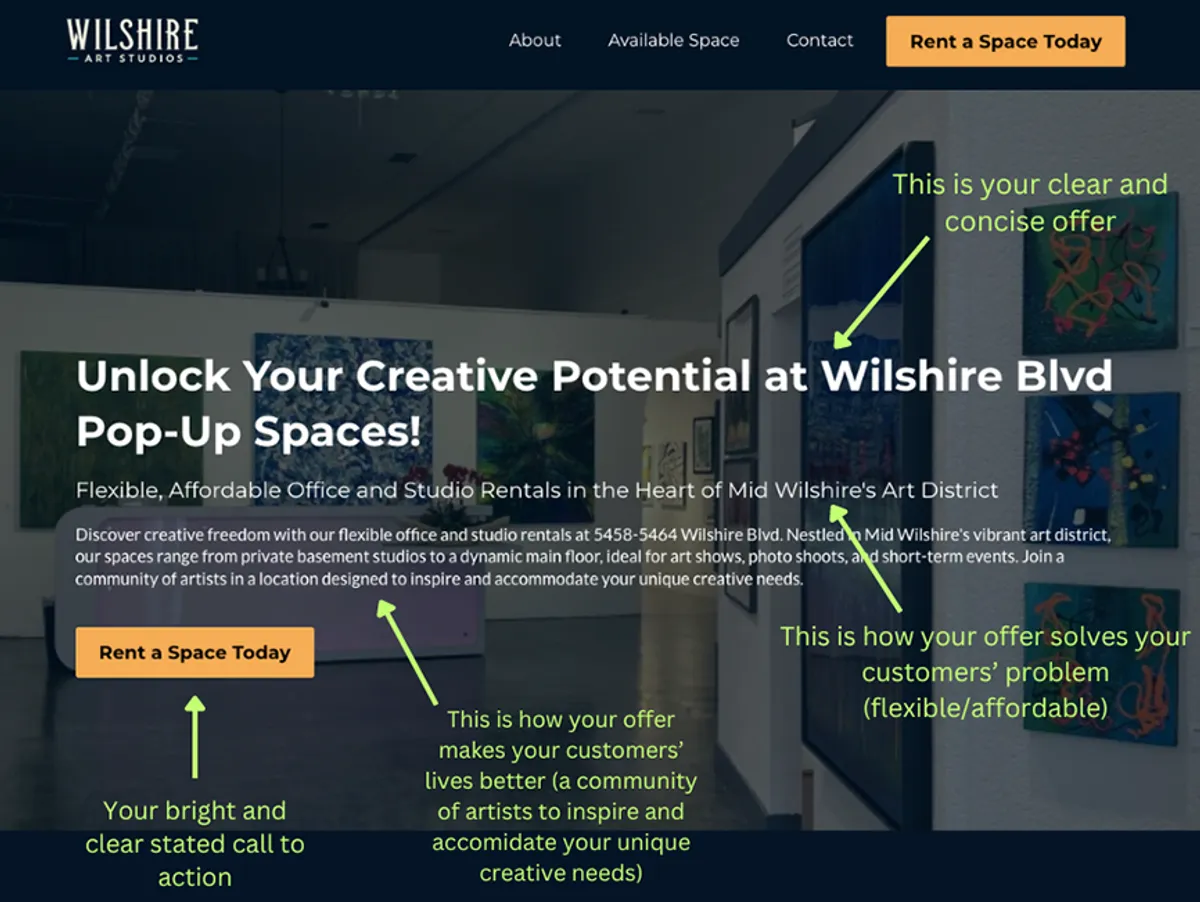
- Does it clearly explain your offer?
- Does it define your customer and the problem you solve?
- Does it guide the user on the next steps?
If you answered “no” to any of these, it’s time for a change! Let’s explore how to craft an effective hero banner that engages visitors, reduces bounce rates, and increases conversions.
The importance of a hero banner
A hero banner is the first thing visitors see when they land on your website. It’s like a virtual handshake that sets the tone for the entire user experience. A well-crafted hero banner can capture attention, convey your value proposition, and guide visitors toward taking action. Conversely, a poorly designed hero banner can confuse visitors, leading to higher bounce rates and lost opportunities.
Key challenges and problems with ineffective hero banners
-
Unclear messaging: If your hero banner doesn’t clearly state what you offer, visitors will be left guessing. This ambiguity can lead to frustration and a quick exit from your site.
-
Undefined audience: Without clearly defining who your offer is for and the problem it solves, your message may not resonate with the right people. A generic message can fail to engage potential customers who might benefit from your services.
-
Lack of direction: Visitors need to know what to do next. A hero banner without a clear call to action (CTA) leaves them wondering what steps to take, increasing the likelihood they’ll leave without engaging further.
Practical recommendations for your hero banner
-
Compelling heading: Clearly state what you offer. Avoid clever or vague taglines. For example, instead of “Innovation at its Best,” try “Affordable Web Design Services for Small Businesses.”
-
Supporting text: Use a subheading or brief supporting text to explain who your offer is for and how it solves their problem. For instance, “We help small businesses grow by creating custom websites that attract and retain customers.”
-
Clear call to action: Make your CTA stand out and describe the next steps. Use action verbs and create a sense of urgency. For example, “Get Your Free Consultation Today” or “Start Your Project Now.”
-
Avoid jargon: Speak your audience’s language. Avoid technical jargon or industry-specific terms that might confuse visitors.
How StoryBrand can enhance your hero banner
While the main focus is on crafting an effective hero banner, the StoryBrand framework by Donald Miller offers valuable insights that can elevate your approach. StoryBrand emphasizes the power of storytelling in marketing, placing the customer at the center of the narrative. Here’s how you can incorporate StoryBrand principles:
- Character: Your customer is the hero of the story. Identify who they are and what they want.
- Problem: Clearly state the problem your customer is facing. This creates empathy and positions your business as understanding their struggle.
- Guide: Present your business as the guide with a plan to solve the problem. This builds trust and authority.
- Call to action: Provide a clear and compelling CTA that guides the customer on the next steps.
By integrating these elements, you can create a hero banner that not only captures attention but also builds a connection with your visitors, encouraging them to stay and explore further.
The impact of storytelling on user experience
Storytelling, when done right, significantly impacts user engagement and conversion rates. According to the Content Marketing Institute, “storytelling can increase user engagement by up to 22 times more than traditional, fact-based ads.” When visitors feel an emotional connection to your story, they are more likely to trust your brand and take action.
User experience data and research
Research shows that clear, user-centric design significantly impacts user engagement. According to a study by the Nielsen Norman Group, users typically leave a webpage within 10-20 seconds unless there’s a compelling reason to stay. A well-designed hero banner can provide that reason by quickly communicating value and guiding users on their journey.
Another study by HubSpot found that “websites with clear, straightforward messaging have a 58% higher chance of converting visitors.” This highlights the importance of simplicity and clarity in your hero banner.
Examples of Effective and High Conversion Hero Banners
Below are some examples of hero banners that effectively engage visitors, clearly communicate their value proposition, and drive conversions. These examples highlight the key elements discussed, including compelling headings, supporting text, clear calls to action, and user-centric design.
Example 1: Tech Product Launch
- Compelling Heading: “Introducing the Future of Smart Home Devices”
- Supporting Text: “Discover how our innovative device can transform your home. Perfect for tech enthusiasts and smart home users.”
- Clear Call to Action: “Pre-Order Now”
Example 2: Online Course Enrollment
- Compelling Heading: “Master New Skills Online”
- Supporting Text: “Join thousands of learners and advance your career with our expert-led courses.”
- Clear Call to Action: “Enroll Today”
Example 3: Fitness App Promotion
- Compelling Heading: “Get Fit, Stay Healthy”
- Supporting Text: “Personalized workouts and nutrition plans to help you achieve your fitness goals.”
- Clear Call to Action: “Download the App”
Example 4: E-commerce Sale
- Compelling Heading: “Summer Sale - Up to 50% Off”
- Supporting Text: “Shop our exclusive summer collection at unbeatable prices.”
- Clear Call to Action: “Shop Now”
Example 5: Travel Agency Offer
- Compelling Heading: “Discover Your Next Adventure”
- Supporting Text: “Book your dream vacation with our tailored travel packages.”
- Clear Call to Action: “Explore Packages”
These examples demonstrate how clear messaging, compelling visuals, and strategic calls to action can significantly enhance the effectiveness of a hero banner, improving user engagement and driving conversions.
Start making changes today
An effective hero banner is more than just an aesthetic element; it’s a crucial part of your website’s user experience strategy. By clearly explaining your offer, defining your audience, and guiding visitors with a strong CTA, you can significantly reduce bounce rates and improve overall engagement.
Don’t let a poorly designed hero banner drive away potential customers. Start making these changes today, and you’ll begin to see a dramatic difference in your website’s performance.
FAQs
What is a hero banner?
A hero banner is the large, prominent image or section at the top of a webpage that usually contains a headline, subheadline, and a call to action.
How does a hero banner affect bounce rates?
An effective hero banner can engage visitors immediately, reducing confusion and frustration, which in turn lowers bounce rates.
What should be included in a hero banner?
A hero banner should include a clear heading, supporting text that defines the audience and problem, and a strong call to action.
Why should I avoid jargon in my hero banner?
Using plain language ensures that your message is easily understood by a wider audience, preventing potential visitors from feeling alienated or confused.